

crochet
Hello and welcome to my crochet page.
I have been a crochet specialist for many years and tutor specialist techniques, including Tunisian, Broomstick and Hairpin Lace. Please browse through and explore my work below.


HISTORY OF CROCHET
Crochet is about 200 years old, and many techniques originated as an imitation of lace, such as Bruges Lace, Venetian Lace, Tenerrife lace, Needlepoint, and bobbin lace.
I have made an extensive study of the history of crochet, aka “poor man’s lace” and teach a number of techniques.
For those who are interested I can give a talk on this subject, bringing along samples of original laces, and crochet immitations.


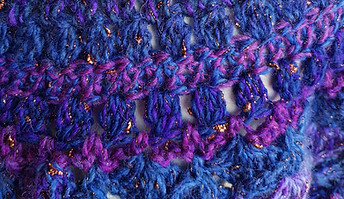
The therapeutic art of crochet
I teach crochet to all levels, from basic to advanced.
I don't mind whether you are a left handed or right handed, or what your previous level of ability is, I can support you learn more.
Reading patterns
Reading diagrammes
Understanding US/UK terminology
Understanding yarn selection, guage, wpi
Stitch hacks


Broomstick Crochet
As the name suggests, this was originally worked on a broomstick, although any large round object will do from a rolling pin, a drumstick, to a very large knitting needle.
It is relative easy to learn, and requires a basic knowledge of crochet to start.


Hairpin Crochet
As the name suggests this was originally worked on hairpins - the solid tortoiseshell variety.
Firstly braids are created on a solid hairpin. the braids are then joined by interweaving or crochet.
Once mastered the variety is endless. You will need to know the basic crochet stitches first before tackling this technique. It takes a bit of practice to get the hang of using the hairpin in one hand and the hook in the other, but the results are worth the effort.


Tunisian crochet
Tunisian Crochet, aka Afghan Crochet or Tricot is worked on a long hook like a knitting needle.
This can create different testured fabrics from very firm and solid, to very open lacy fabric which drapes beautifully.
There are long extendable hooks on the market, making it possible to work very large shawls and blankets.
There are endless patterns available for this very versatile technique.


